Beyond The Blade: What To Expect From Your LASIK Doctor
Write-Up Author-Hammer Martensen
As you think about visual correction surgery, especially the LASIK procedure, one of the most crucial decisions you will make is selecting the right surgeon. A skilled LASIK surgeon can significantly affect your surgery's success and your satisfaction with the results overall. With developments in medical technology, the choices available to patients have expanded, and knowing what to expect from your laser eye surgeon can assist reduce your anxiety.
Beginning with consultations to the actual procedure, knowing how to evaluate a bladeless LASIK surgeon's credentials and experience is crucial. The journey to clearer vision starts with confidence in your surgeon, so let's explore the key factors that will lead you through this important decision and ensure you feel confident along the journey.
Criteria of a Surgeon Specializing in LASIK
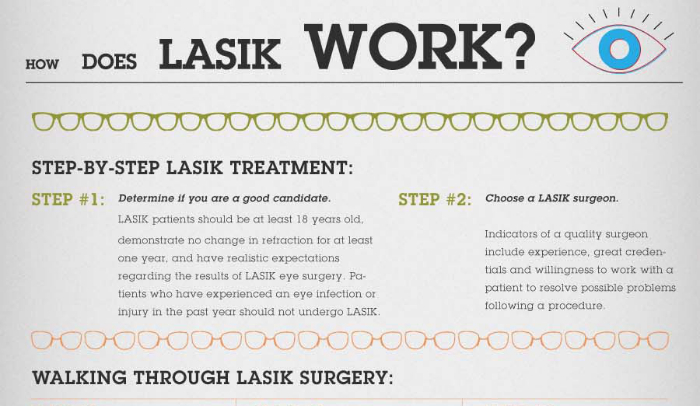
A skilled LASIK surgeon should have a strong educational background, typically obtaining a medical degree from an approved medical school. After completing their medical education, they pursue several years of specialized training in ophthalmology. This training includes extensive clinical experience in diagnosing and treating various eye conditions, as well as conducting surgical procedures. A surgeon's educational credentials are a key indicator of their expertise and should not be ignored.
In addition to formal education, a LASIK surgeon should possess relevant certifications. Board certification in ophthalmology indicates that the surgeon has fulfilled specific standards of knowledge and skill in eye care. It is also essential to check if the surgeon has completed additional training specifically in LASIK procedures. A surgeon who continues to seek out ongoing education and training shows a commitment to staying updated on the latest advancements in LASIK technology and techniques.
Experience is another vital factor when selecting a LASIK surgeon. An seasoned LASIK surgeon will have performed a significant number of procedures, making them more proficient at handling various scenarios that may arise during surgery. When consulting https://www.webmd.com/eye-health/papilledema-optic-disc-swelling , inquire about their experience with specific LASIK techniques, such as bladeless LASIK, as this can also influence the outcome of your procedure. A seasoned surgeon can support you in navigating you through the process and enhance your confidence in your decision.
Understanding Bladeless LASIK
Bladeless LASIK, also referred to as all-laser Laser-Assisted in Situ Keratomileusis, utilizes state-of-the-art laser technology to create the corneal flap without the use of a microkeratome blade. This technique enhances accuracy and reduces risks associated with traditional LASIK procedures. With laser-assisted flap creation, the likelihood of complications is considerably lowered, making it an attractive option for individuals seeking vision correction.
One of the primary benefits of selecting a bladeless LASIK surgeon is the improved comfort during the procedure. Patients often describe feeling reduced pressure and experience lesser side effects, such as glare and ringing lights, after surgery. The fully laser technique also allows for a more customized treatment, as the surgeon can modify the flap size and positioning to fit the unique shape of each individual's cornea.
Additionally, blade-free Laser-Assisted in Situ Keratomileusis generally results in shorter recovery times compared to traditional techniques. Patients can typically resume their normal activities within a brief period, often just a day after the procedure. This swift healing and high level of contentment contribute to the growing popularity of blade-free LASIK among those looking to achieve sharper vision with minimal downtime.
Choosing the Ideal Laser Eye Surgeon
Selecting the right laser eye surgeon is vital to achieving the best results from your LASIK procedure. Start by seeking an experienced LASIK surgeon who has a proven reputation in performing the surgery. Consider their credentials, such as board accreditation and focused training in refractive surgery. A surgeon with extensive experience will be knowledgeable about a variety of eye conditions and the latest technologies, making sure that they can adapt the procedure to your specific needs.
Another, important factor is the technology used in the surgery. Choose a no-blade LASIK surgeon who uses state-of-the-art laser systems for the procedure. https://mgyb.co/s/gbOzc lead to quicker recovery times and reduced discomfort compared to traditional methods. During consultations, ask about the equipment the surgeon utilizes and whether they conduct custom LASIK designed to your unique vision profile. Knowing that your surgeon employs state-of-the-art technology can give you added confidence in your choice.
In conclusion, consider the surgeon's communication style and the support staff available at the clinic. A great laser eye surgeon will take the time to address all your inquiries and concerns, providing you with a clear insight of the procedure, potential risks, and expected outcomes. The overall experience at the clinic should feel inviting and professional, with dedicated staff who can support you through the process from the initial consultation to post-operative care. Prioritizing these elements will help you find a surgeon you can rely on and feel safe with along your LASIK journey.
What exactly to Look Forward to Throughout the Surgery
When you show up for your LASIK procedure, your skilled LASIK surgeon will first ensure you are comfortable and settled. Prior to the procedure starts, you'll undergo a few initial exams to confirm that your eyes are fit for the operation. This will entail checking your eye pressure, calculating the curvature of your cornea, and capturing detailed images of the eye. The complete process is intended to meet that your individual vision needs are met.
In the course of the actual procedure, a non-bladed LASIK doctor will utilize advanced laser technology to redesign your cornea. You will be administered numbing eye drops to lessen discomfort, and you will remain awake throughout the surgery, which typically lasts merely about 10 to 15 minutes for each eye. Your laser eye surgeon will guide you to concentrate on a specific light, helping to alleviate any nerves you might have as the laser does its work.
After your LASIK procedure is completed, you will be taken to a recovery area where the medical team will monitor you for a brief period. You may feel some short-lived haze or discomfort, but these sensations are usually mild and not lasting. Your surgeon will go over post-operative care instructions and schedule follow-up appointments to verify your healing process is going well.